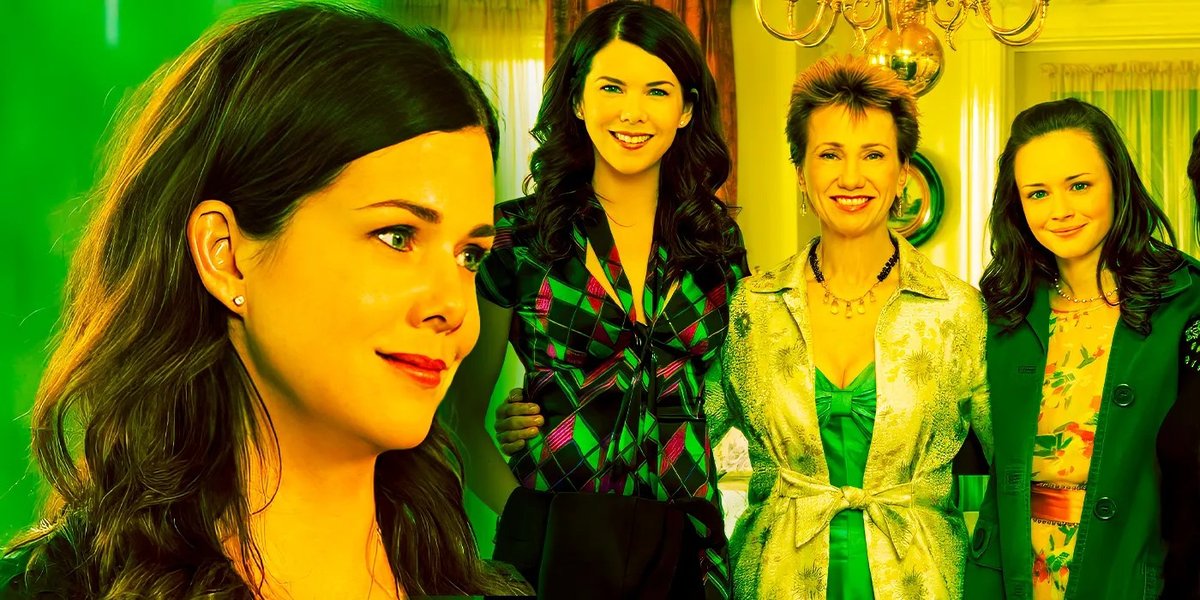
Lorelai Gilmore, the quick-witted, coffee-fueled heart of Stars Hollow, is beloved for her fierce independence, pop culture references, and uniquely close bond with her daughter, Rory. But beneath the rapid-fire banter and charming quirks lies a complex woman whose approach to romance, both her own and Rory's, is profoundly shaped by a past she simultaneously embraces and runs from. This Character Analysis: Lorelai Gilmore's Approach to Romance delves into how Lorelai's history, particularly her journey as a teenage mother, is the invisible hand guiding her romantic judgments and desires.
We've all seen Lorelai's strong opinions on Rory's boyfriends—sometimes endearing, often infuriating. But dismissing these reactions as mere maternal overprotectiveness would be missing the forest for the trees. Each young man Rory brought home was more than just a boyfriend; he was a mirror reflecting a piece of Lorelai's own history, stirring up old wounds, rekindling lost hopes, and igniting deep-seated fears for her daughter's future.
At a Glance: Lorelai's Romantic Blueprint
- Past as Prologue: Lorelai's experiences as a teenage mother and her relationship with Christopher profoundly influence her romantic worldview.
- Projected Fears: Her reactions to Rory's boyfriends often stem from projecting her own past struggles and anxieties onto Rory's potential paths.
- Dean: The Echo of Christopher: Initially favored, Dean later became a painful reminder of Christopher's unreliability and Lorelai's own romantic disappointments.
- Jess: The Rebellious Mirror: Lorelai saw her own youthful recklessness in Jess, triggering fears that Rory might repeat her difficult journey.
- Logan: The Affluent Antagonist: Logan represented the privileged world Lorelai fled, sparking anxieties about Rory losing her independence and ambition.
- Hope for a Different Path: Ultimately, Lorelai wants Rory to forge her own stable, successful path, free from the challenges Lorelai herself faced.
The Roots of Romantic Reckoning: Lorelai's Formative Years
To understand Lorelai's approach to romance, we must first understand the seismic event that defined her young adulthood: becoming a mother at 16. This single choice set her on a trajectory far removed from the planned path laid out by her affluent, traditional parents, Richard and Emily Gilmore. She rejected their world, their expectations, and their perceived stifling influence, choosing independence and Stars Hollow over debutante balls and Ivy League legacies.
This rejection wasn't just geographical; it was ideological. Lorelai built a life steeped in hard work, self-reliance, and a fierce determination to provide Rory with opportunities she never had, all while avoiding the "traps" of her parents' social stratum. This foundational experience—the dramatic break from her past and the self-made triumph that followed—became the lens through which she viewed all future relationships, especially Rory's.
Her initial romance with Christopher, Rory's father, was a whirlwind teenage love. But it also represented the road not taken, the path of youth interrupted, and ultimately, a relationship marked by Christopher's inconsistency and unreliability. These early experiences weren't just personal history; they were lessons Lorelai carried, often unconsciously, into every new romantic encounter and every judgment of Rory's choices.
Dean: The Ghost of Christopher and the Promise of Innocence
When Dean Forester first entered Rory's life, Lorelai saw a reflection of her own youthful romance with Christopher. Dean was kind, attentive, and completely smitten with Rory—everything a mother might wish for her daughter's first love. For Lorelai, Dean represented the pure, uncomplicated teenage romance she was denied when her own world irrevocably changed. She saw an opportunity for Rory to experience the innocence she missed, a chance for her daughter to have a "normal" first love without the overwhelming consequences Lorelai herself endured.
Lorelai initially championed Dean, seeing the charm and dependability that reminded her of Christopher's best qualities before life complicated things. She enjoyed his presence, his easygoing nature, and his adoration for Rory. Dean was, in many ways, the Christopher of her idealized memory – the devoted high school sweetheart, without the later disappointments.
However, as Dean and Rory's relationship evolved, so did Lorelai's perception. Dean's growing possessiveness, his struggles with Rory's expanding world, and ultimately, his infidelity (with a married Lorelai!) painfully reminded Lorelai of Christopher's flaws. It resurrected her own unacknowledged feelings about Christopher’s absences and inconsistencies, the way he would appear and disappear, causing joy and then heartbreak. Dean’s later entanglement with Rory, while Lorelai was dating Luke, echoed Lorelai’s own complicated and often emotionally messy history with Christopher. It was a stark reminder that even the most promising beginnings could lead to heartache and difficult choices, mirroring the very struggles Lorelai had hoped Rory would avoid. Dean's journey, therefore, became a complex emotional trigger for Lorelai, morphing from a symbol of nostalgic hope to a painful echo of her own romantic disappointments and the less desirable aspects of Christopher's character.
Jess: The Rebellious Reflection and a Mother's Deepest Fears
Jess Mariano was a different kind of catalyst for Lorelai, pushing her buttons in ways Dean never could. In Jess, Lorelai saw a version of her younger self: the rebellious, intelligent, misunderstood teenager who defied authority and was charting an uncertain course. She recognized the spark, the intelligence, and the underlying vulnerability in Jess, but also the instability, the defiance, and the potential for self-sabotage.
Lorelai's protective instincts went into overdrive with Jess. She instinctively feared that Rory, so brilliant and full of potential, might follow a similarly difficult path if she got too deeply involved with someone so seemingly unmoored. Lorelai's own struggles with identity, her difficult choices (including becoming a young mother), and the sheer effort it took to build a stable life for herself and Rory made her desperate to guide Rory toward a steadier, more predictable future. Jess, with his unpredictable nature and lack of clear direction, felt like a direct threat to that carefully constructed dream.
Her disapproval wasn't just about Jess's personality; it was a subconscious attempt to safeguard Rory from the "wrong" kind of influence, the kind that could derail ambitions and lead to unexpected hardships. Lorelai knew firsthand the immense challenges of navigating life without a clear map, and she desperately wanted Rory to have an easier, more straightforward journey than her own. Her reactions to Jess were less about him and more about the vivid, unsettling memories he conjured of her own tumultuous adolescence and the difficult path she chose. She loved Rory too much to watch her repeat Lorelai's own youthful mistakes, even if Jess presented as an intellectual match for Rory in a way Dean never could.
Logan: The World She Escaped and the Fight for Rory's Independence
The sharpest tensions and most profound anxieties for Lorelai arose with Logan Huntzberger, Rory’s wealthy, carefree college boyfriend. Logan didn't just represent a type of boy; he symbolized the entire upper-class world Lorelai had so vehemently rejected and fled. He was charming, privileged, and undeniably part of the "Gilmore" legacy—a legacy Lorelai had worked her entire adult life to separate herself and Rory from.
Lorelai’s disdain for Logan stemmed from a deep-seated desire to keep Rory grounded, independent, and free from the perceived traps of that elite society. She feared that Logan’s world, with its effortless wealth and lack of tangible consequences, would lull Rory into a life of complacency, detaching her from the ambition, hard work, and self-reliance that Lorelai valued above all else. Lorelai had seen how that world had trapped her mother, Emily, binding her to societal expectations and limiting her personal agency. She didn't want that for Rory.
Logan's carefree behavior, his privileged sense of entitlement, and his ability to smooth over mistakes with money and connections clashed directly with Lorelai’s dream for Rory to forge her own path based on merit, intelligence, and effort. The incident where Rory dropped out of Yale after a scolding from Logan's father, Mitchum Huntzberger, and then moved into Emily and Richard’s pool house, was Lorelai’s worst nightmare realized. It confirmed her fears that Logan and his world could enable Rory’s detachment from her ambitions, leading her away from the independent, self-made woman Lorelai had painstakingly raised her to be.
Lorelai eventually accepted Logan, but always with guarded reservations. Her acceptance wasn't an embrace of his world, but a grudging trust in Rory's choices, coupled with an unshakeable desire to safeguard her daughter from repeating the mistakes and pitfalls of Lorelai's own past with privilege. It was a testament to her ultimate belief in Rory's judgment, but a constant battle against her own deep-seated aversions.
The Teenage Mother's Enduring Influence: Lorelai's Worldview
Lorelai’s complex mother-daughter dynamic with Rory, particularly concerning romantic relationships, is a direct reflection of her worldview, which was profoundly shaped by being a teenage mother. For Lorelai, each of Rory's boyfriends wasn't just a potential partner; he symbolized a potential threat to Rory's stability, mirroring Lorelai's own struggles and critical decisions at those very ages.
Her judgments and skepticism were not malicious; they were born from a fiercely protective love and a vivid memory of her own arduous journey. Lorelai’s ultimate hope was for Rory to succeed on her own terms, to experience all the joys and opportunities Lorelai fought so hard to create, but without the struggles and heartaches Lorelai herself faced. This perspective humanizes Lorelai's character, showing a protective mother grappling with her personal history while fiercely supporting her daughter's independence and autonomy. She wanted Rory to have love, yes, but a love that complimented, rather than complicated, her ambitions.
Beyond Rory's Boyfriends: Lorelai's Own Romantic Trajectory
Understanding Lorelai's reactions to Rory's boyfriends also sheds light on her own romantic patterns. Her long-standing on-again, off-again relationship with Christopher, despite his consistent unreliability, speaks to the powerful pull of first love and shared history. There was an undeniable comfort and familiarity in Christopher, a connection to her youth, even if he often fell short of her adult needs for stability and partnership.
Contrast this with her relationship with Luke Danes. Luke represented stability, unwavering support, and a grounded presence that was the antithesis of Christopher's impulsiveness and the Gilmores' old-money privilege. Lorelai often gravitated towards men who could offer a sense of security she felt she had to provide for herself and Rory, but also struggled with fully committing to the deep intimacy and vulnerability that true stability required. Her hesitations, her sudden cold feet, and her periodic returns to Christopher can be seen as her wrestling with those past wounds and the fear of truly letting go of the self-reliance she had painstakingly cultivated.
Ultimately, for Lorelai, romance was never simple. It was intertwined with her identity, her journey, and her dreams for Rory. The question of Who is Lorelais endgame? isn't just about a romantic pairing; it's about Lorelai finding a partner who truly understands and supports the complex woman she has become, one who doesn't threaten the carefully balanced life she's built, but rather enhances it. Her own path to lasting love was as winding and complicated as her reactions to Rory's, all shaped by the same powerful forces of her past.
Common Questions: Unpacking Lorelai's Romantic Psychology
Was Lorelai too hard on Rory's boyfriends?
It's easy to see Lorelai as overly critical or even hypocritical, especially given her own less-than-perfect romantic history. However, her "hardness" wasn't random or malicious. It was a manifestation of deep-seated anxieties and protective instincts. For Lorelai, Rory's boyfriends weren't just individuals; they were symbols of potential paths for Rory. Her reactions were intensified by her own past experiences and her fierce desire for Rory to avoid similar pitfalls. So, while she might have been hard, it stemmed from a place of profound love and fear.
Did Lorelai project her past onto Rory's relationships?
Absolutely. Lorelai's ground truth is undeniably her own unique history. When she saw Dean, she saw Christopher. When she saw Jess, she saw her rebellious younger self. And when she saw Logan, she saw the gilded cage of her parents' world. Her projections were a coping mechanism, an unconscious way to try and steer Rory away from the emotional landmines Lorelai herself had encountered. This projection, while sometimes unfair to the boyfriends, highlights the depth of her maternal care and the enduring impact of her own formative experiences.
How did Lorelai's independence affect her romantic choices?
Lorelai's hard-won independence was her superpower, but also her Achilles' heel in romance. Having built a life from scratch, she was incredibly self-reliant and often struggled to fully cede control or vulnerability in a partnership. She sought partners who could complement her independence without undermining it. This led to a push-and-pull dynamic, where she craved partnership but often feared losing herself in the process, a common struggle for strong, self-made women.
Navigating Your Own Lorelai Moments: Insights for Modern Relationships
Lorelai Gilmore's journey offers potent lessons for anyone trying to navigate their own romantic landscape, whether it’s your relationships or those of people you care about.
1. Acknowledge Your Ground Truth
Like Lorelai, everyone has a "ground truth"—a set of formative experiences, family dynamics, and past relationships that shape how they approach love. Recognizing your personal ground truth is the first step toward understanding your reactions, fears, and attractions. What patterns do you notice in your past relationships? What anxieties resurface when a loved one starts a new romance? Self-awareness is key.
2. Recognize Projection in Action
It’s natural to project our hopes and fears onto others, especially our children or close friends. Lorelai's story vividly illustrates how easily past hurts can manifest as present-day anxieties. When you find yourself reacting strongly to someone's partner or a friend's romantic choice, pause and ask: Is this truly about them, or is it triggering something from my past?
3. Balance Protection with Trust
Lorelai’s ultimate acceptance of Logan (with reservations) showcases the delicate balance between protecting loved ones and trusting their judgment. While our experiences offer valuable insights, every individual must make their own choices and learn their own lessons. Offering guidance from a place of love, rather than control, allows for growth and strengthens bonds.
4. Understand Your Partner's Lorelai
Just as Lorelai’s past shaped her, your partner's past shapes them. Taking the time to understand their "ground truth"—their family dynamics, past heartbreaks, and life-defining moments—can foster deeper empathy and stronger communication. It helps you see their reactions not as personal attacks, but as echoes of their own unique journey.
Embracing the Complexity: Why Lorelai's Romance Resonates
Lorelai Gilmore is a character who resonates deeply because her struggles are universally human. Her approach to romance, influenced by her history as a young mother and her rejection of her past, is a testament to the enduring power of our formative experiences. She reminds us that love is rarely simple; it's a tapestry woven with threads of hope, fear, independence, and an ever-present past.
Her journey is one of growth, learning to navigate her own desires while fiercely protecting her daughter, all while trying to reconcile the woman she was with the woman she wants to be. It's a messy, beautiful, and profoundly honest portrayal of how our personal histories don't just shape us, but actively participate in every romantic decision we make. And in that complexity, Lorelai Gilmore continues to teach us about love, resilience, and the enduring power of a mother's heart.